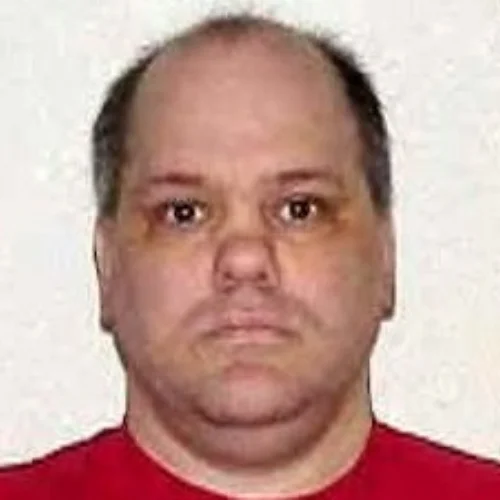
b: 1957
Summary
Name:
Brian Keith MooreYears Active:
1979Birth:
December 16, 1957Status:
Awaiting ExecutionClass:
MurdererVictims:
1Method:
ShootingNationality:
USAb: 1957
Summary: Murderer
Name:
Brian Keith MooreStatus:
Awaiting ExecutionVictims:
1Method:
ShootingNationality:
USABirth:
December 16, 1957Years Active:
1979Brian Keith Moore was born on December 16, 1957. At the time of the crime in August 1979, he was 21 years old. Before the murder, Moore was living in the Louisville, Kentucky area and was connected to people later named in the case, including Kenny Blair and Lynn Thompson. Court records state that Moore stayed with Blair and Thompson at their apartment shortly before the killing. The same records also describe Moore as a regular drug user, and Moore claimed that he was “high” on the day of the crime.
On August 10, 1979, Virgil Harris, a 77-year-old Louisville ice cream shop owner, followed his regular routine. He left his store around 11:20 a.m., drove his maroon 1978 Buick to Liberty National Bank in Shively, made a deposit, collected rolls of coins, and then stopped at an A&P grocery store to buy bananas. Shortly before noon, an eyewitness saw a young man matching Brian Keith Moore’s description standing near Harris’s car and pointing a gun at the older man.
According to the prosecution’s evidence, Harris was abducted, robbed, and taken to a wooded area near Jefferson Hill Road. Court records state that Moore later told Kenny Blair that Harris had pulled a mask from Moore’s face during the robbery. Moore allegedly said he was not going to let Harris live to identify him, then drove Harris away and shot him.
Virgil Harris was killed by gunfire. Later accounts describe him as being shot multiple times at close range. The case was treated as a kidnapping, robbery, and murder because Harris was taken from the grocery store area and killed after the robbery.
After the killing, Moore was seen driving Harris’s maroon Buick. At Blair and Lynn Thompson’s apartment, Thompson testified that Moore arrived carrying a paper sack containing a money bag, a gun, a clip, rolls of coins, and bananas. Moore allegedly said he had robbed a “place” of $250. Police later found Harris’s car at the Shady Villa apartment parking lot. Moore had Harris’s car keys in his possession and was wearing Harris’s wristwatch.
Kenny Blair became a major witness in the case. Blair contacted his attorney and offered information about the murder while he was seeking favorable treatment in an unrelated felony matter. Blair told authorities that Moore had admitted killing Harris and had taken him to the body. Police also relied on physical evidence, including Moore’s fingerprints in Harris’s car and on coin wrappers, soil on Moore’s trousers that was compared to soil from the crime scene, and evidence that Moore had recently fired a gun. Court records also state that Moore made a verbal confession after his arrest, although Moore denied confessing.
Moore denied killing Harris and claimed that Kenny Blair was the real perpetrator. His defense presented testimony from James Lofton, a jail inmate who said Blair had admitted to committing the robbery and murder and framing Moore. The Kentucky Supreme Court later found that parts of Moore’s first trial were unfair, including improper cross-examination and improper prosecutorial comments. On June 15, 1982, the court reversed the original conviction and sent the case back for further proceedings.
Moore was tried again in 1984. A Kentucky jury convicted him of the 1979 kidnapping, murder, and first-degree robbery of Virgil Harris. During the penalty phase, the jury found that the murder occurred during a first-degree robbery and sentenced Moore to death. The Kentucky Supreme Court later affirmed the conviction and sentence, and the U.S. Supreme Court declined review.
In later years, Moore continued to challenge his conviction and sentence. His case drew attention because of claims that evidence connected to the crime had been lost or mishandled and because Moore maintained that he had been framed. The Innocence Project reported in 2007 that prosecutors said they could not locate certain evidence that had previously been identified for DNA testing, including pants and shoes from the crime scene. The Innocence Project also noted that it was not representing Moore.
In 2024, Kentucky Center for Investigative Reporting and Kentucky Lantern reported that Moore’s attorneys claimed new DNA testing showed Moore was not the source of DNA on a suit jacket prosecutors had linked to the killer’s clothing. The report stated that Moore’s attorneys had filed a motion to vacate his conviction, while the Kentucky Attorney General’s office planned to oppose the motion. These later claims remain post-conviction litigation issues and do not, by themselves, overturn Moore’s conviction.
As of the latest available official correctional listing found, Brian Keith Moore remains an active Kentucky death row inmate. Kentucky has also had an execution injunction in place for years, and a 2024 Associated Press report stated that a judge declined to lift the injunction blocking executions while lethal-injection issues continued to be litigated.
