Summary
Name:
Brian Donald HumeNickname:
The Flying SmugglerYears Active:
1949 - 1959Status:
DeceasedClass:
MurdererVictims:
2Method:
StabbingNationality:
United KingdomSummary: Murderer
Name:
Brian Donald HumeNickname:
The Flying SmugglerStatus:
DeceasedVictims:
2Method:
StabbingNationality:
United KingdomYears Active:
1949 - 1959Date Convicted:
September 30, 1959“I, Donald Hume, do hereby confess.”
— Brian Donald Hume
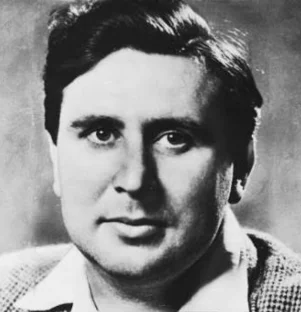
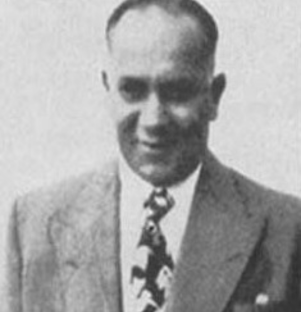
Brian Donald Hume was born in 1919. In 1941, he was invalided out of the Royal Air Force after suffering from meningitis, though he later falsely claimed to have been an RAF pilot. He worked by day as an electrician, and by night became involved in criminal activity, including stealing cars to order for a business associate, Stanley Setty (born Sulman Seti), a Jewish car dealer and black-market "kerbside banker" who had emigrated from Baghdad as a child. Setty, known to associates as "Stan the Spiv," habitually carried large sums of cash and used forged vehicle logbooks to disguise stolen cars brought to him by Hume. Hume also learned to fly light aircraft and used this skill for various smuggling activities. A quarrel developed between the two men, reportedly after Setty kicked Hume's dog.
On October 4, 1949, Stanley Setty visited Hume’s flat on Finchley Road in London. Setty was carrying a large amount of cash after selling a car and cashing a cheque for £1,000 in £5 notes. According to Hume’s later confession, an argument developed between the two men. Hume claimed that the confrontation became physical and that he used a German SS dagger he kept as a wartime souvenir. Setty was stabbed and killed inside the flat.
After Setty’s death, Hume hid the body in the flat and began trying to remove evidence. He cleaned parts of the apartment and attempted to deal with bloodstains. He also moved Setty’s car back to Setty’s lock-up so the vehicle would not be found outside his own home.
Hume then planned to dispose of the body by air. On October 5, 1949, he dismembered Setty’s body and wrapped the remains into parcels. He took some of the remains to Elstree airfield and flew out in a light aircraft. His plan was to drop the body parts into the sea, where he expected them to disappear.
The plan failed. The torso did not sink as intended and later washed up on the Essex marshes near Tillingham. The discovery led police back to Setty and then to Hume. Investigators traced some of Setty’s £5 notes, learned that Hume had hired an aircraft, and found blood evidence under the floorboards of his flat. Police arrived at Hume’s home on October 27, 1949.
Hume denied murdering Setty. He claimed that three men known as Mac, Greeny, and The Boy had paid him to dispose of parcels and that he did not initially know the parcels contained human remains. The prosecution argued that Hume’s story was false, but the first jury could not reach a verdict. At the second stage of proceedings, Hume was not convicted of murder. Instead, he pleaded guilty to being an accessory after the fact for helping dispose of Setty’s body.
In January 1950, Hume was sentenced to 12 years in prison. A newspaper report from the time stated that he pleaded guilty to the accessory charge and received the 12-year sentence. He ultimately served about eight years before being released in 1958.
After his release, Hume publicly confessed to murdering Stanley Setty in a paid newspaper story. TIME reported that the confession was sold after his release and that Hume knew he could not be retried for the same murder. Because the confession was paid for and Hume had a history of lying, later analysts have treated it carefully; however, the confession became central to the public record of the case.
Hume’s criminal activity continued after the confession. TIME reported that he later committed bank robberies and used aliases, including Donald Brown and John Stephen Bird. He eventually moved to Zurich, Switzerland, where he lived under an assumed identity.
On January 30, 1959, Hume entered a Zurich bank armed with a pistol. During the robbery, he shot and seriously wounded a bank employee. He then fled into the street with a small amount of money. Arthur Maag, a taxi driver, tried to stop him during the escape. Hume shot Maag, who died from his injuries. Hume was then captured after members of the public and police intervened.
Hume was tried in Switzerland. On September 30, 1959, he was found guilty of murdering Arthur Maag and was sentenced to life imprisonment with hard labor. A Reuter report published the next day in The Straits Times confirmed the murder conviction and life sentence.
Hume spent many years in Swiss custody. Later accounts state that he was returned to Britain in the 1970s and held at Broadmoor Hospital, the high-security psychiatric hospital. City Journal reported that he spent years at Broadmoor before being moved to an ordinary psychiatric hospital and later released into the community.
Brian Donald Hume died in 1998. Bethlem Museum of the Mind lists his lifespan as 1919 to 1998. A later historical account states that he was found dead on hotel grounds near an area connected to his childhood and that the likely cause was a heart attack, but the exact official date and certified cause of death were not verified in the accessible sources reviewed.
