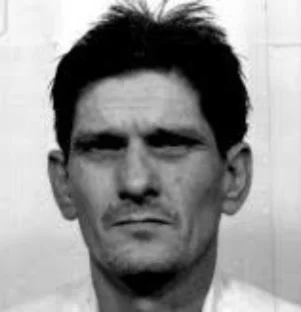
1943 - 1995
Summary
Name:
Billy Conn GardnerYears Active:
1983Birth:
July 28, 1943Status:
ExecutedClass:
MurdererVictims:
1Method:
ShootingDeath:
February 16, 1995Nationality:
USA1943 - 1995
Summary: Murderer
Name:
Billy Conn GardnerStatus:
ExecutedVictims:
1Method:
ShootingNationality:
USABirth:
July 28, 1943Death:
February 16, 1995Years Active:
1983Date Convicted:
October 20, 1983"I forgive all of you, and I hope God forgives all of you all." In a final letter to his attorney, he wrote: "You know as well as I do that my trial and appeal attorneys sold my life for the money the court paid them to represent me. My fate was sealed before you... ever became involved in my case."
— Billy Conn Gardner
Billy Conn Gardner, named after a former light heavyweight boxing champion, was born on July 28, 1943. According to his later legal advocates, he was given his first dose of heroin by a relative at age 9, which led him into a life as a drug runner and career criminal. He was first imprisoned at age 19 following convictions for larceny and burglary.
By the time of his 1995 execution, he had accumulated ten additional felony convictions. At the time he was arrested for the murder of Thelma Row, he was on parole, having served fewer than six years of a 20-year sentence for forgery, assault, burglary, and carrying a prohibited weapon — a sentence he received while already on parole for an earlier burglary and robbery conviction. His attorney later maintained that despite this extensive criminal record, Gardner had never been violent.
On the afternoon of May 16, 1983, someone entered a back room of the cafeteria at Lake Highlands High School in Richardson, Texas (a suburb of Dallas), where cafeteria manager Thelma Catherine Row, 64, was counting the day's receipts. The intruder robbed her and shot her once, the bullet punctured her liver. She died eleven days later, on May 27, 1983. Approximately $1,600 was taken in the robbery.
The prosecution's case centered on the testimony of Melvin Sanders, an admitted accomplice whose wife, Paula Sanders, worked at the cafeteria and was in training to become its assistant manager. Sanders testified that, having learned from his wife that the cafeteria handled several thousand dollars in daily receipts, he approached Gardner more than once about robbing the location, and that Gardner ultimately carried out the robbery and shooting. In exchange for his cooperation and testimony against Gardner, Sanders received significant leniency.
Under Texas law, accomplice testimony alone cannot support a conviction without independent corroborating evidence. On appeal, the Texas Court of Criminal Appeals found such corroboration in testimony that Gardner had been seen outside the cafeteria shortly before the crime, wearing clothing similar to the robber's, with a stocking tucked under his cap, along with his participation in counting money later that same afternoon, and — described by the court itself as more tenuous — his alleged attempt to sell a gun matching the murder weapon roughly two months later.
However, no physical evidence — no fingerprint, photograph, or forensic item — ever directly placed Gardner inside the school or cafeteria. Two eyewitnesses to the robbery, cafeteria worker Carolyn Sims and school custodian Lester Matthews, both described the gunman as having reddish-blond hair and a goatee. Gardner had black hair and was clean-shaven.
Gardner was arrested on July 26, 1984, roughly fourteen months after the crime, and was tried and convicted of capital murder, with a jury imposing a death sentence after finding the required special issues under Texas law. His trial attorney reportedly spent only about fifteen minutes meeting with him prior to trial. On direct appeal, Gardner challenged the sufficiency of the evidence, arguing the accomplice testimony was inadequately corroborated; the Texas Court of Criminal Appeals rejected this argument and affirmed his conviction and death sentence on March 25, 1987 (Gardner v. State, 730 S.W.2d 675).
In 1988, Christine Wiseman, an attorney and law professor at Marquette University in Wisconsin and a board member of the ACLU of Wisconsin Foundation, learned of Gardner's case and volunteered to represent him without charge. She initially had to fight for permission to practice in Texas courts at all, after the state objected to her involvement on the basis that she was not licensed there — even as an emergency stay application was needed just weeks into her involvement. Wiseman represented Gardner for the following seven years, assisted by attorney David Bourne (a former student of hers) and attorney E.J. Hunt, without payment and at times covering expenses out of pocket, maintaining throughout that Gardner was innocent.
Billy Conn Gardner was executed by lethal injection at the Huntsville Unit in Huntsville, Texas, just after midnight on February 16, 1995 — the sixth person executed in Texas that year, in a state that by that point had carried out 91 executions since the death penalty's reinstatement in 1976, more than any other state. He denied committing the murder until the end. In his final statement, he said, "I forgive all of you, and I hope God forgives all of you all." His mother, Nettie Gardner, responded, "I've never been more proud of you than I am now." His sister (recorded in different accounts as either Betsy Gray or Barbara Gray) told reporters afterward, "My brother was convicted of a crime he did not commit. Tonight, once again, the State of Texas has committed cold-blooded murder," and separately described his death, saying, "Don't let anyone tell you this is a peaceful way to die. It's a lie, it's a lie, it's a lie."
Shortly before his execution, Gardner wrote a final letter to Wiseman, thanking her for her years of effort on his behalf and absolving her of any guilt over the outcome, writing in part: "You know as well as I do that my trial and appeal attorneys sold my life for the money the court paid them to represent me. My fate was sealed before you... ever became involved in my case." Wiseman received the letter only after Gardner had already been executed.
