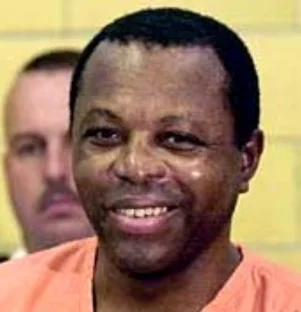
1954 - 2003
Summary
Name:
Amos Lee King Jr.Years Active:
1977Birth:
August 16, 1954Status:
ExecutedClass:
MurdererVictims:
2Method:
StabbingDeath:
February 26, 2003Nationality:
USA1954 - 2003
Summary: Murderer
Name:
Amos Lee King Jr.Status:
ExecutedVictims:
2Method:
StabbingNationality:
USABirth:
August 16, 1954Death:
February 26, 2003Years Active:
1977“I would like the governor and the family to know I am an innocent man, and the state had evidence to that effect. I’m sorry for the victim’s family, for all the things we have gone through.”
— Amos Lee King Jr.
Amos Lee King Jr. was born on August 16, 1954. Before the 1977 case, King had a 1972 robbery conviction. By March 1977, he was serving a sentence for larceny of a firearm at the Tarpon Springs Community Correctional Center, a minimum-security work-release facility in Pinellas County, Florida. The facility was located close to the home of Natalie “Tillie” Brady, a 68-year-old widow who lived alone in Tarpon Springs.
King was assigned to work outside the facility. On March 17, 1977, he worked at a restaurant in Clearwater from about 5:00 p.m. until 1:00 a.m. the next morning. He was picked up by an inmate van and returned to the correctional center at about 2:35 a.m. Within about an hour, prison counselor James McDonough discovered that King was missing from his room during a routine bed check.
During the early morning hours of March 18, 1977, Natalie “Tillie” Brady was attacked inside her Tarpon Springs home. Her house was located about 1,500 feet from the Tarpon Springs Community Correctional Center, where Amos King was housed as a work-release inmate.
At about 3:40 a.m., counselor James McDonough noticed that King was missing from the facility. McDonough found King outside the building with blood on his pants. He escorted King back inside, but a struggle followed. During the fight, King stabbed McDonough repeatedly with a knife. McDonough survived the attack, although he suffered multiple stab wounds.
King then fled the facility. Around the same time, police and emergency responders noticed a fire at Brady’s home. Firefighters entered the house and found Brady’s body near a doorway, where she had apparently tried to escape the flames. She had been raped, beaten, and stabbed. Medical evidence showed head and neck injuries, stab wounds, and sexual injuries. Investigators concluded that the fire had been intentionally set.
The prosecution relied heavily on circumstantial evidence tying King to Brady’s home and the attack. Evidence included blood on King’s clothing, his unexplained absence from the work-release facility, the timing of his return, the knife used against McDonough, and the location of Brady’s home near the facility. Florida Supreme Court records state that King was convicted of first-degree murder, escape, involuntary sexual battery, robbery, arson, and attempted first-degree murder of James McDonough.
King maintained that he did not kill Brady. He admitted involvement in the fight with McDonough but denied responsibility for Brady’s murder. His case remained in litigation for decades, including repeated appeals, postconviction claims, and DNA-related efforts near the end of his life.
King was originally sentenced to death after his conviction. In later federal proceedings, the Eleventh Circuit granted relief as to the sentencing phase because of ineffective assistance of counsel during penalty proceedings. He was resentenced to death, and the Florida Supreme Court later affirmed the new death sentence.
In 2002 and early 2003, King received temporary stays while DNA testing was reviewed. The testing did not produce evidence that stopped the execution. He continued to maintain his innocence until the end.
Amos Lee King Jr. was executed by lethal injection at Florida State Prison on February 26, 2003. He was pronounced dead at 6:43 p.m. In his final statement, he said he was innocent and expressed sorrow for the victim’s family and for what everyone involved had gone through.
