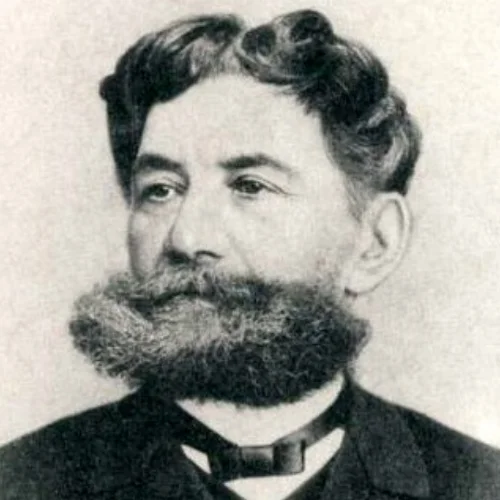
1817 - 1903
Summary
Name:
Alexander Vasilyevich Sukhovo-KobylinNickname:
The Eternal SuspectYears Active:
1950 - 1957Birth:
September 29, 1817Status:
DeceasedClass:
MurdererVictims:
1Method:
Bludgeoning / Throat cuttingDeath:
September 24, 1903Nationality:
Russia1817 - 1903
Summary: Murderer
Name:
Alexander Vasilyevich Sukhovo-KobylinNickname:
The Eternal SuspectStatus:
DeceasedVictims:
1Method:
Bludgeoning / Throat cuttingNationality:
RussiaBirth:
September 29, 1817Death:
September 24, 1903Years Active:
1950 - 1957Alexander Vasilyevich Sukhovo-Kobylin was born on September 29, 1817, in Moscow, Russia. He was the son of Vasily Alexandrovich, a retired colonel who served in the Napoleonic Wars. The family was part of the Russian aristocracy and claimed ancestry with the Romanovs. Alexander was known for being a bright student, and he attended Moscow University where he excelled. He even earned a gold medal for his work on suspension bridges.
After completing his studies, Sukhovo-Kobylin traveled to Germany to study philosophy in Heidelberg and Berlin. He developed an interest in the ideas of the philosopher Hegel and became part of the intellectual circles of his time. In 1842, he joined the Moscow civil service and held the title of titular councillor. Despite this position, he preferred business and started various enterprises, including ventures in forestry, breeding livestock, textiles, and even vodka production. He was involved in the establishment of Russia's first champagne cellars and enjoyed sports, particularly horse racing.
Although he had success in his studies and business, Sukhovo-Kobylin also gained a reputation for his controversial character. He was known as a womanizer and a sharp-tongued gossiper, often disliked by others despite his aristocratic background. He continued to have affairs, one of which was with Louise Simon-Dimanche, a French milliner he had started seeing around 1842. Louise moved to Moscow and managed his wine and provisions business. Their relationship, though tumultuous, lasted several years.
By November 1850, Sukhovo-Kobylin had moved to a wing of his family home, while Louise lived separately in an apartment managed by servants. His mother was accepting of Louise, treating her as a trusted family friend. Around this time, Sukhovo-Kobylin was reportedly in an affair with another woman named Natalya Naryshkina, which caused tension in his relationship with Louise.
On November 9, 1850, the police began investigating the disappearance of Louise after Sukhovo-Kobylin expressed concern for her whereabouts. She was later found deceased, which led to a lengthy legal ordeal for Sukhovo-Kobylin. Throughout his early life, he was known for his wealth and connections, which would play significant roles in the events that unfolded later. Alexander Sukhovo-Kobylin lived until September 24, 1903, passing away in Beaulieu, France.
On November 9, 1850, in Moscow, the body of Louise-Simone Dimanche was discovered in a ravine near the Vagankovsky cemetery. She was identified as a young woman of notable beauty, dressed elegantly, but she had suffered a terrible fate. Her throat had been cut, and there were signs of physical violence on her body. This discovery came after she had been missing for two nights.
The police began their investigation by looking for evidence and interviewing witnesses. Alexander Vasilyevich Sukhovo-Kobylin, a wealthy nobleman and her lover, first approached the police chief on November 8, expressing concern for her whereabouts. After her body was found, Sukhovo-Kobylin's involvement was called into question. The police found inconsistencies in his statements and evidence in his home that seemed suspicious.
During the investigation, Sukhovo-Kobylin's servants were also questioned. Sukhovo-Kobylin's cook, Efim Egorov, later confessed to murdering Louise with the help of other household servants. According to Egorov and the others, they acted out of revenge for her abusive behavior toward them when she was alive. Their plan to kill her started on the night of November 7, as they discussed their grievances.
On the night of the murder, the group reportedly entered her bedroom while she was sleeping. They physically attacked her, leading to her death. Afterward, they placed her body in a sleigh and transported it to the outskirts of Moscow, where they dumped her in the ravine.
The investigation shifted focus several times, with Sukhovo-Kobylin being arrested on suspicions of being involved in the murder. He maintained his innocence and argued that any signs of blood found in his rooms were the result of previous occupants. Legal battles followed, with Sukhovo-Kobylin claiming that he was framed due to his ability to pay bribes and navigate the elite of Russian society.
Eventually, after a lengthy legal process, the courts found the four servants guilty of her murder, but Sukhovo-Kobylin was acquitted. This outcome was met with skepticism by many, leading to ongoing speculation and debate about his possible guilt. The case left a mark on Sukhovo-Kobylin's life, inspiring him to write plays that critiqued the judicial system in Russia.
In the end, Sukhovo-Kobylin was formally absolved of the murder charge in 1857, but the mystery surrounding Louise's death never fully disappeared. The events of that tragic night continued to be a topic of intrigue and speculation in Russian society for years to come.
