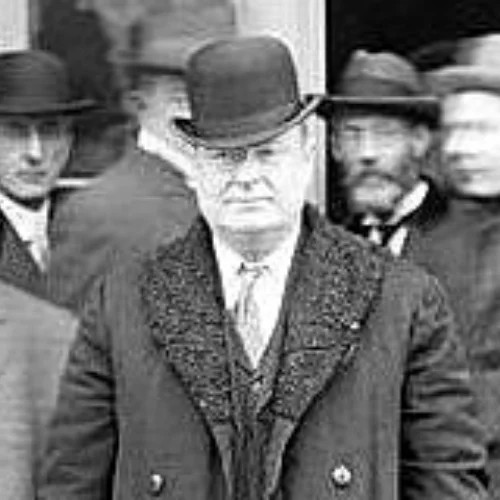
1866 - 1940
Summary
Name:
Albert Taliaferro PatrickNickname:
Albert T. PatrickYears Active:
1900Birth:
February 26, 1866Status:
DeceasedClass:
MurdererVictims:
1Method:
PoisoningDeath:
February 11, 1940Nationality:
USA1866 - 1940
Summary: Murderer
Name:
Albert Taliaferro PatrickNickname:
Albert T. PatrickStatus:
DeceasedVictims:
1Method:
PoisoningNationality:
USABirth:
February 26, 1866Death:
February 11, 1940Years Active:
1900Date Convicted:
March 26, 1902“I am innocent.”
— Albert Taliaferro Patrick
Albert T. Patrick was born on February 26, 1866 in Texas. He attended law school and began practicing law in the state. However, his legal career faced challenges. In 1892, Patrick moved to New York City to avoid disbarment proceedings for unethical conduct in a case that had gained the attention of a federal judge. He continued his questionable practices in New York, but not much is known about his life there before he became involved in the murder of William Marsh Rice.
Patrick's early life is not extensively documented, but he was known for engaging in dubious legal activities. He had a wife, who died under mysterious circumstances in 1896. Following her death, Patrick became involved in the affairs of William Marsh Rice, a wealthy philanthropist and businessman.
Patrick met Charles F. Jones, who was Rice's personal valet. Together, they devised a plan to murder Rice and steal his wealth. They wanted to secure wealth that would come from a forged will meant to favor Patrick and Jones over a charitable institution Rice intended to benefit.
Patrick's connection to Rice and his subsequent actions that led to the murder in 1900 marked a significant turn in his life.
On September 23, 1900, William Marsh Rice died at his apartment in New York City. He was 84 years old and had been ill for some time, though it was believed he would recover. At the time of his death, his valet, Charles F. Jones, was in the room. Jones had previously saturated a towel with chloroform and placed it over Rice's face while he slept. After thirty minutes, he returned to find Rice dead.
Following Rice's death, the circumstances surrounding it quickly raised suspicion. Two days later, Jones and Albert Patrick, who had conspired with Jones to murder Rice for financial gain, were arrested. Patrick had a motive to eliminate Rice since he intended to benefit from a forged will that would leave Rice's wealth to him instead of a charitable institution.
The investigation revealed that Patrick had long planned this crime. He had drafted a forged will several months before Rice's death and instructed Jones to begin poisoning Rice with mercury pills to weaken him. However, they resorted to chloroform as the date of Rice's death approached.
After Rice died, Patrick attempted to cash forged checks from Rice's bank account, but the bank was suspicious, leading them to contact Rice's lawyer. This prompted an autopsy which unveiled the details of Rice's death, ultimately linking Patrick to the planning and execution of the murder.
During the trial that followed, Jones testified against Patrick. He initially confessed to the murder, stating that he acted under Patrick’s direction. The jury found Patrick guilty of murder and forgery on March 26, 1902. He was initially sentenced to death by electrocution, but his sentence was later commuted to life imprisonment in 1906.
On November 28, 1912, the governor of New York pardoned Patrick, citing lingering uncertainties in the evidence against him. Patrick spent the remaining years of his life in Oklahoma, where he died in February 11, 1940.
