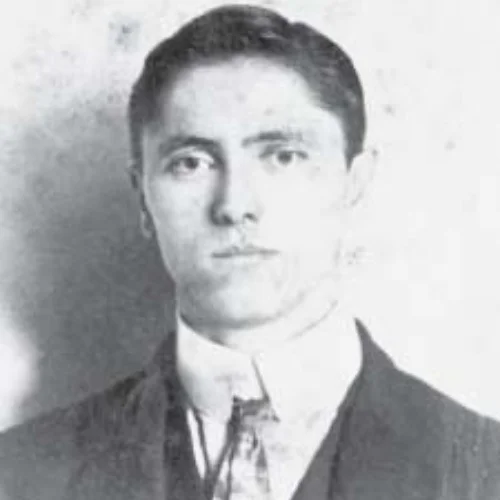
d: 1903
Summary
Name:
Albert Edwin BatsonNickname:
Ed BatsonYears Active:
1902Status:
ExecutedClass:
Mass MurdererVictims:
6Method:
Bludgeoning / Stabbing / Shooting / Throat slashingDeath:
December 08, 1903Nationality:
USAd: 1903
Summary: Mass Murderer
Name:
Albert Edwin BatsonNickname:
Ed BatsonStatus:
ExecutedVictims:
6Method:
Bludgeoning / Stabbing / Shooting / Throat slashingNationality:
USADeath:
December 08, 1903Years Active:
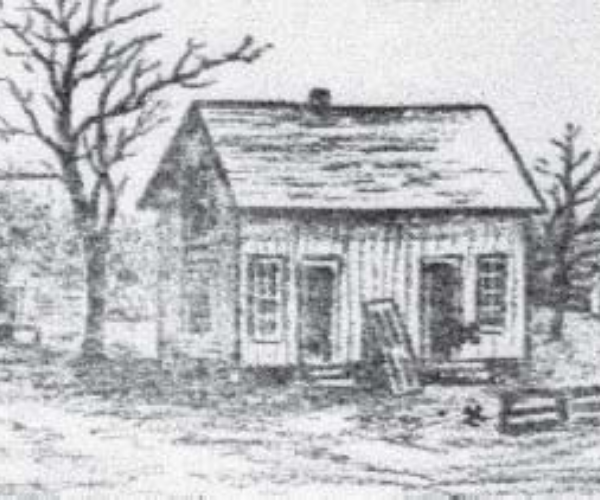
1902Albert Edwin Batson, also known as Ed Batson, was born in Spickard, Missouri, and raised by a divorced mother. He worked as a railroad laborer beginning in 1897 before eventually traveling to Louisiana. In 1901, Batson arrived in Welsh, a small town in the southwestern part of the state, where he was hired by Ward Earll to work on the Earll family’s rice farm. Batson moved into a homesteader’s cottage with Ward and worked alongside him in the months leading up to the murders.
The Earll family, originally from Iowa, had relocated to Louisiana around 1890 to farm rice. After experiencing multiple crop failures, they temporarily moved into retail by opening a store in Welsh, before eventually returning to farming. At the time of the killings, the family consisted of L.S. Earll, 53, his wife, approximately 50, sons Ward (25), Fred (23), John (18), and Lemuel (11), and daughters Maude and Fay (15). Only Fred and Maude were not present at the family farm on the night of the murders. Fred was living in Iowa, while Maude worked for another family in Welsh.
While Batson was known to be quiet and polite, accounts vary on whether he was well-liked. Some later described him as a model prisoner, and his guilt would remain controversial for over a century. Prior to the murders, there were no known serious disputes between Batson and the Earll family.
On February 14, 1902, six members of the Earll family were found dead inside their rural home near Welsh, Louisiana. Each victim had been either shot or struck with a blunt object, and their throats had been cut. Cloth had been wrapped around some of the wounds. The bodies were discovered in a state of advanced decomposition, indicating they had been killed several days earlier—on or around February 11.
The victims were L.S. Earll, Mrs. Earll, their sons Ward, John, and Lemuel, and daughter Fay. Only Fred and Maude Earll were not present and thus survived. The crime shocked the community, both due to its brutality and the number of victims.
Suspicion quickly fell on Albert Batson, who had worked for the family and was last seen with Ward Earll on the night of February 11. After the murders, a man claiming to be Ward Earll appeared in Lake Charles and attempted to sell livestock belonging to the Earll family. He also dropped off a shotgun and a watch at local shops, but used the names “C.R. Batson” and “A.E. Batson” when asked for identification. Witnesses described him as having a noticeable scar on the left side of his face. That same day, he mailed a package—later found to contain only rice—to his mother in Missouri.
Afterward, local businessman Paul Daniels contacted Maude Earll, who had not heard from her family in days. She returned to the farm with a hired driver and discovered the bodies. A vest found in the family’s buggy contained a note signed by Batson. The note concluded with the line “ha ha bye bye I’m gone,” which became known as the “Ha-Ha letter.” By then, Batson had boarded a train to Missouri.
He was arrested later that same day in Princeton, Missouri, by Deputy Isaac Fontenot. At the time of his arrest, Batson was carrying only $2 in cash. He was returned to Louisiana and formally charged with the murders.
Batson stood trial in Lake Charles in April 1902. He was defended by court-appointed attorneys Paul Sompayrac and Winston Overton. The prosecution, led by District Attorney Joseph Moore, claimed that Batson had murdered the family, sold their mules for $45, and fled to Missouri. The defense argued that Batson had no motive and that two unidentified men—one of whom also had a facial scar—had been seen in the area around the time of the killings and may have carried out the crime due to a prior grudge against the Earll family. Batson did not testify in his own defense and maintained his innocence throughout the proceedings.
Batson was found guilty and sentenced to death, but the Louisiana Supreme Court overturned the conviction due to a technicality. A second trial was held in March 1903, and Batson was again found guilty and sentenced to death. A series of legal missteps led to him being sentenced to death a total of four times. In one instance, the sentence was suspended because the judge had failed to ask Batson whether he had anything to say before sentencing, a legal requirement even though Batson had already been asked in earlier hearings.
In the final stage of the legal process, the Louisiana State Pardon Board recommended commuting Batson’s sentence to life imprisonment. Governor William Wright Heard denied the request after Judge E.D. Miller—who presided over the trials—refused to travel to Baton Rouge to discuss the case. As a result, the execution proceeded as scheduled.
On August 15, 1903, Albert Edwin Batson was executed by hanging at the jail in Lake Charles, Louisiana.
