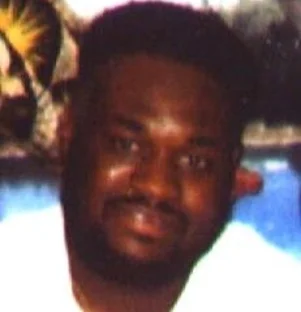
1963 - 2001
Summary
Name:
Abdullah Tanzil HameenNickname:
Cornelius FergusonYears Active:
1980 - 1991Birth:
October 07, 1963Status:
ExecutedClass:
MurdererVictims:
2Method:
ShootingDeath:
May 25, 2001Nationality:
USA1963 - 2001
Summary: Murderer
Name:
Abdullah Tanzil HameenNickname:
Cornelius FergusonStatus:
ExecutedVictims:
2Method:
ShootingNationality:
USABirth:
October 07, 1963Death:
May 25, 2001Years Active:
1980 - 1991Date Convicted:
December 1, 1992"Tara, I hope this brings you comfort and eases your pain some."
— Abdullah Tanzil Hameen
Abdullah Tanzil Hameen was born as Cornelius Eugene Ferguson Jr. on October 7, 1963. He grew up in Chester, Pennsylvania, and became involved in criminal activity at a young age. By the age of 17, he had already committed his first homicide, killing a patron of a bar in Delaware. He later accumulated additional convictions, including aggravated assault offenses that left two people seriously injured.
While incarcerated on Delaware's death row, Ferguson converted to Islam and adopted the name Abdullah Tanzil Hameen. During his years in prison, he became known among supporters as a mentor to younger inmates and at-risk youths. Several supporters, including religious leaders and former prisoners, argued that he had undergone a genuine rehabilitation and had become a model prisoner.
On the night of August 5, 1991, Troy Hodges traveled to the Tri-State Mall in Claymont, Delaware, to purchase half a kilogram of cocaine for $10,000. Hodges was accompanied by his friend, Alvin Wiggins, who remained in another vehicle with part of the cash. The transaction had been arranged through Tyrone Hyland, who acted as an intermediary.
Hameen accompanied Hyland to the meeting and sat in the back seat of Hyland's vehicle. After Hodges entered the front passenger seat, an argument erupted regarding the drugs and money. According to Hameen, Hyland secretly handed him a loaded handgun during the dispute. Hameen later claimed that he believed Hodges was reaching for a firearm and that he fired in self-defense. Investigators determined that the object Hodges had reached for was actually a pager.
Evidence showed that the gun's muzzle had been pressed against Hodges' body when the shot was fired. The bullet entered Hodges' left side from behind and caused massive internal bleeding. After being shot, Hodges exited the vehicle, ran a short distance, and collapsed in the parking lot. Witnesses observed the incident and called for help.
Hameen initially denied responsibility but later gave a taped confession to Delaware State Police on September 26, 1991, admitting that he had fired the fatal shot. Prosecutors argued that the murder occurred during an attempted drug robbery and sought the death penalty.
A Delaware jury convicted Hameen of two counts of first-degree murder and related charges in November 1992. During the penalty phase, the jury unanimously recommended death after finding several aggravating circumstances, including his prior murder conviction and the fact that the killing occurred during an attempted robbery. The trial judge imposed two death sentences on December 1, 1992.
Over the following years, Hameen pursued numerous appeals and sought clemency, emphasizing his rehabilitation and religious conversion. His supporters argued that he had become a positive influence on others while incarcerated. Nevertheless, Delaware's Board of Pardons and the courts refused to halt his execution.
Shortly after midnight on May 25, 2001, Abdullah Tanzil Hameen was executed by lethal injection at the Delaware Correctional Center in Smyrna, Delaware. Before his death, he addressed the victim's sister, saying:
"Tara, I hope this brings you comfort and eases your pain some."
He then told his mother and wife:
"Mom and Shakeerah, I love you. I'll see you on the other side. That's all."
He was pronounced dead at 12:07 a.m., becoming the thirteenth inmate executed in Delaware since the state resumed executions in 1992.
