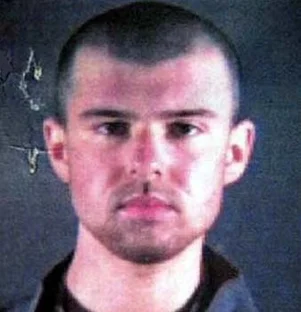
Summary
Name:
Aaron LindhYears Active:
1988Status:
ImprisonedClass:
MurdererVictims:
2Method:
ShootingNationality:
USASummary: Murderer
Name:
Aaron LindhStatus:
ImprisonedVictims:
2Method:
ShootingNationality:
USAYears Active:
1988“Shoot me. Kill me.”
— Aaron Lindh
Aaron J. Lindh was born in 1968. He was Black and was adopted as an infant by a white family in Madison, Wisconsin. His adoptive parents were John and Mary Ann Lindh. Lindh was removed from his birth mother as a baby and was adopted by the Lindh family when he was still very young. His adoption and early family history later became part of his defense during his sanity proceedings. His lawyers argued that his childhood and identity struggles helped explain his mental and emotional problems, although the jury did not accept insanity as a legal defense.
His early life was troubled. His adoptive mother described serious behavioral problems beginning when he was still a child. These problems included stealing, setting fires, fighting, and threats toward his family. He was also described as having talked about violence and having attempted self-harm when he was young.
As Lindh grew older, he continued to have contact with counselors, doctors, therapists, juvenile courts, treatment programs, foster homes, and group homes. Several witnesses later described him as someone who had long-term emotional and behavioral problems. Mental-health experts discussed possible disorders during his later court proceedings, including reactive attachment disorder and personality disorders.
Lindh was employed before the shooting. In January 1988, he was 19 years old and worked at Webcrafters, a book manufacturing company. He had worked there for nearly three years. On the morning of January 15, 1988, he finished an overnight shift before going to his credit union and later returning to his apartment.
That same day, Lindh became upset after several personal problems happened close together. He had trouble getting a loan, believed his apartment had been burglarized, suspected a former roommate, and felt frustrated with the police response. These events led him to the City-County Building in Madison, where the shootings took place.
On January 15, 1988, Aaron J. Lindh went to the City-County Building in Madison, Wisconsin. Earlier that day, he had finished his overnight work shift and had gone to his credit union about a loan. He later returned home and believed his apartment had been burglarized.
Lindh suspected a former roommate because there was no clear forced entry and the former roommate still had a key. He contacted police about the burglary. He became frustrated and later went to the police area inside the City-County Building to ask about the investigation. After speaking with police, Lindh left the building and went to his car. Inside the car, he had a modified .22-caliber rifle. He then returned to the building with the rifle hidden under his coat.
Lindh entered an office of the Dane County Sheriff’s Department. Inside, he shot and killed Eleanor M. Townsend, a secretary. He also shot Erik H. Erickson, who was there to pay a parking ticket. Erickson was seriously wounded but survived. Lindh then moved through the building toward the county coroner’s office. There, he shot and killed Clyde “Bud” Chamberlain, the Dane County coroner. Chamberlain had served as coroner for many years.
After the shootings, Lindh confronted law enforcement officers. He pointed the gun toward a deputy and challenged officers to shoot him. He was then shot, wounded, and taken into custody. He was transported to Madison Meriter Hospital, where he underwent surgery. Lindh was later tried in Wisconsin. He faced charges for two counts of first-degree murder, one count of attempted first-degree murder, weapon-related offenses, and carrying a firearm in a public building. He pleaded guilty to some weapon charges, while a jury found him guilty of the murder and attempted-murder charges.
His defense argued that he was legally insane at the time of the shootings. The trial was handled in two phases. In the second phase, the jury considered whether he had a mental disease or defect that made him not legally responsible. The jury rejected that defense and found that he was responsible under Wisconsin law. Lindh was sentenced to two consecutive life terms in prison, plus an additional term for the attempted murder and related offenses. Later appeals focused partly on whether his lawyers should have been allowed to question a state psychiatrist about misconduct allegations that could affect his credibility. The case eventually reached the U.S. Supreme Court under the name Lindh v. Murphy.
In 1997, the U.S. Supreme Court ruled on a federal habeas issue connected to his case. The ruling did not erase the fact that Lindh had been convicted for the killings of Clyde Chamberlain and Eleanor Townsend and the shooting of Erik Erickson. His current legal status remains imprisoned.
