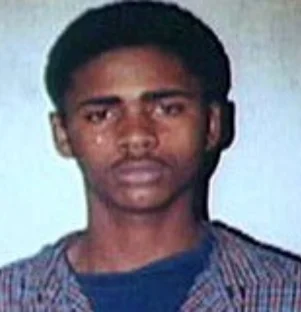
Summary
Name:
Aaron HardinYears Active:
1999Status:
ReleasedClass:
MurdererVictims:
1Method:
ShootingNationality:
USASummary: Murderer
Name:
Aaron HardinStatus:
ReleasedVictims:
1Method:
ShootingNationality:
USAYears Active:
1999Date Convicted:
December 15, 2000"I'm sorry about what happened. I know it was a horrible crime... my brother was everything to me."
— Aaron Hardin
Aaron Hardin was born in 1984 and grew up in Louisville, Kentucky, with his younger brother, Andre Hardin. At the age of 15, Aaron became the center of a highly publicized criminal case after his younger brother died from a gunshot wound inside the family's home. Because Kentucky law permitted juveniles as young as fourteen to be tried as adults for certain firearm-related felonies, Aaron was transferred from juvenile court and prosecuted in adult court.
During the proceedings, his attorneys described him as a teenager with no prior criminal record who panicked after the shooting. Family members and supporters portrayed him as a remorseful youth devastated by the loss of his brother.
After his conviction, Jefferson Circuit Judge James Shake ordered that Aaron initially serve his sentence in a juvenile facility to provide him with an opportunity for rehabilitation before any transfer to the adult prison system.
Aaron was granted shock probation but later violated the terms after admitting to marijuana use. He was subsequently granted a second shock probation and released from prison on January 2, 2006.
Only a few months after his release, he was indicted again in Louisville on separate burglary and assault charges stemming from allegations that he participated in an attack on a woman in February 2006.
On the evening of December 27, 1999, Aaron Hardin, his 13-year-old brother Andre, and their friend Michael Graham were playing a video game inside the bedroom shared by the two brothers in their Louisville, Kentucky, home. The game had been given to Andre as a Christmas gift just two days earlier and allowed only two players at a time. The boys took turns playing, and at one point Aaron wanted another turn. According to testimony, he tried to take the controller from Andre, leading to some horseplay and wrestling between the brothers. Both Aaron and Michael later described the interaction as playful, involving laughter and tickling rather than a serious fight.
A short time later, while Andre and Michael were focused on the game, a gunshot suddenly rang out. The bullet struck Andre in the jaw and traveled into his brain. After the shooting, Aaron attempted to help his brother and then ran next door to get his mother before making a frantic 911 call. During the call, he falsely claimed that the shooting had been the result of a drive-by attack and maintained that story while police and emergency personnel searched for an outside shooter.
As investigators failed to find any evidence that a bullet had entered the home from outside, they began questioning Aaron's account. He was taken to police headquarters, where he eventually admitted that the fatal shot had come from his own handgun. Aaron told investigators that the gun had been sitting on a chair in the bedroom and that it accidentally discharged when he picked it up. He later explained that he wanted to put the weapon away before his younger brother noticed it.
Andre never regained consciousness and died from his injuries. Police later recovered the firearm after Aaron led them to the location where he had thrown it into a neighbor's snow-covered yard shortly after the shooting. Prosecutors argued that Aaron intentionally or wantonly fired the weapon because he was angry during the dispute over the video game. Ballistics testing indicated that the revolver could not fire accidentally from being dropped or struck and required the trigger to be pulled.
The defense maintained that the shooting was a tragic accident and emphasized the close relationship between the brothers. They argued that Aaron's false statements to police were motivated by fear and panic rather than guilt. On December 15, 2000, after less than two hours of deliberation, the jury acquitted Aaron of intentional murder but found him guilty of wanton murder and possession of a handgun by a minor.
On February 7, 2001, he was sentenced to 22 years in prison for the murder conviction, along with an additional one-year sentence for the handgun offense. During sentencing, Aaron expressed remorse and stated that his brother had meant everything to him and that he lived with nightmares and grief over the shooting.
After serving several years in custody, he was released on shock probation on January 2, 2006.
